

A recent pulse survey, conducted by Wellbeing with Cari, aimed to discover how you and your HR peers are managing wellbeing within your organisations right now.
Read on to see the headline results from the survey, which was publicised within CIPD LinkedIn groups between the dates of 19 January and 11 February 2021. (You can also gain access to the full results report.)
About The Pulse Survey
We asked for your views on:
- How you feel about the wellbeing provision within your organisation
- How you would describe your wellbeing provision
- If you think your organisation should be doing more about wellbeing
- Why you think your organisation is not doing more
- If you proactively collect data on your employees’ levels of wellbeing
- If you would like to prioritise wellbeing and put it at the heart of everything you in HR
- If you use technology to assist you with delivering wellbeing
- If you think technology can help improve wellbeing
A total of 20 individuals completed this survey from organisations of varying sizes:
- Three from organisations with 50 people or less
- Six from organisations of 50-250 people
- Four from organisations of 250-1,000 people
- Two from organisations of 2,500-5,000 people and
- Five from organisations of 5,000+ people.
Headline Results
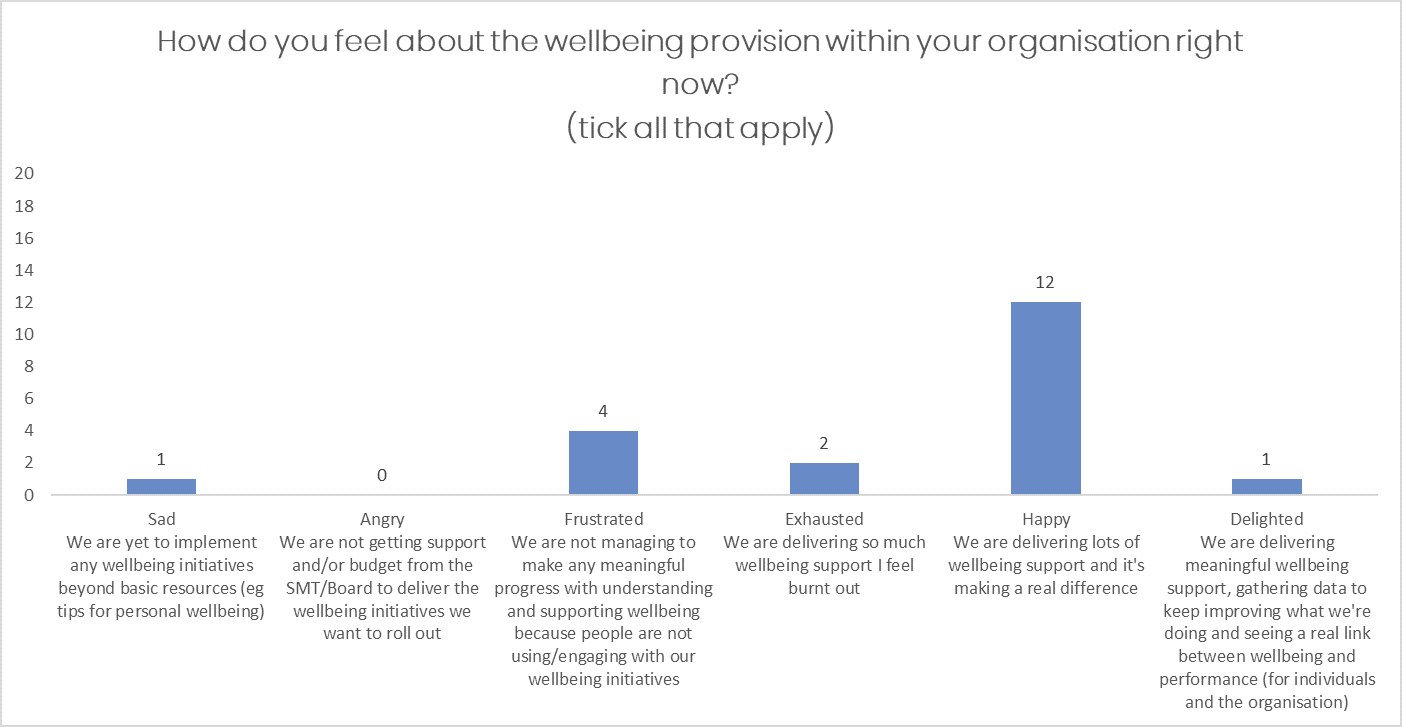
How do you feel about the wellbeing provision within your organisation right now?
The report showed some optimism from the majority of respondents, 60% saying they were happy with their wellbeing provisions and that this was making a difference to employees. The report did not identify the types of support and ROI that this may be generating from these initiatives, and this would be something to follow up in subsequent research.
35% of respondents felt sad, frustrated and exhausted about the state of wellbeing initiatives within their workplace.
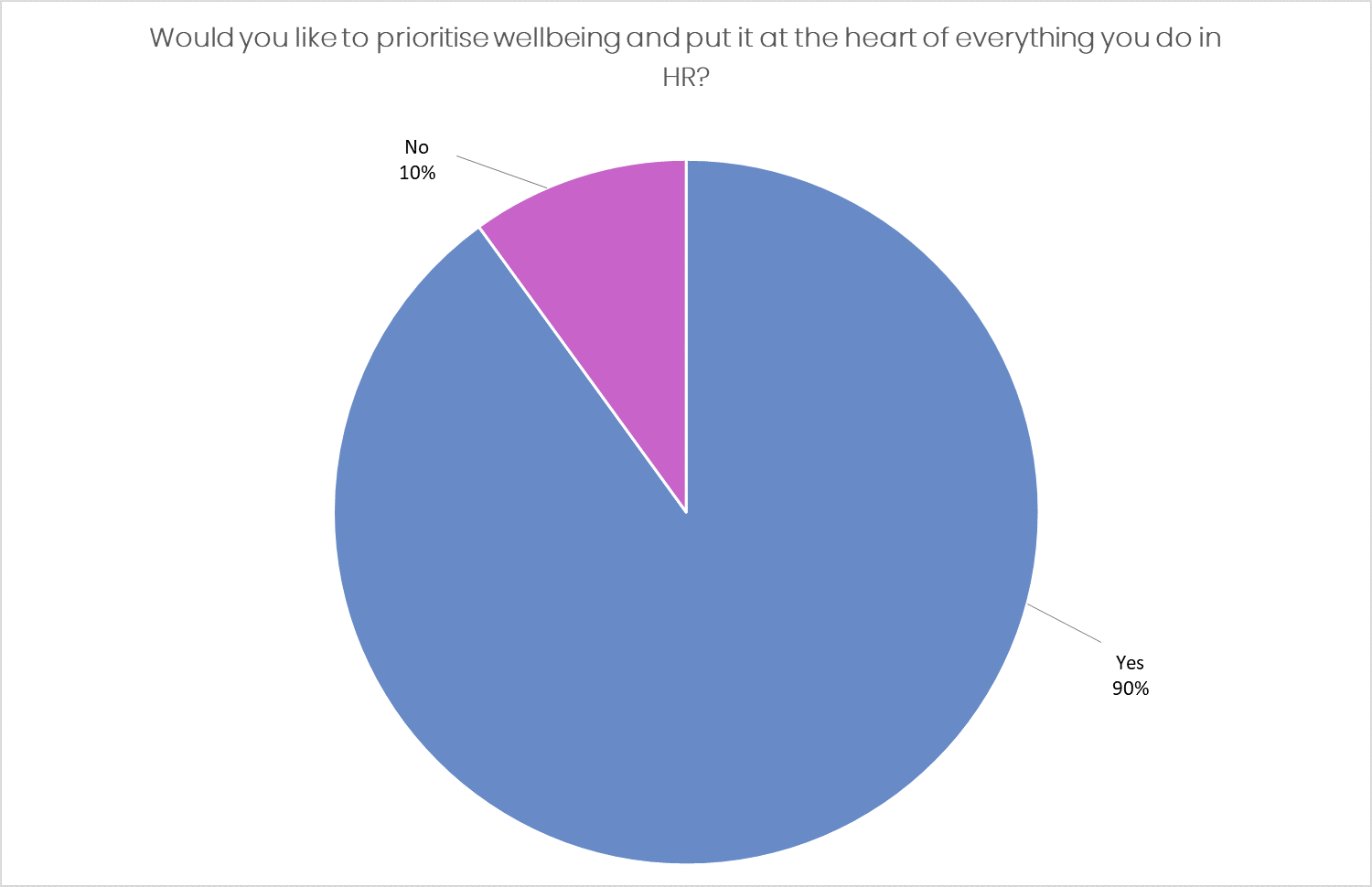
Would you like to prioritise wellbeing and put it at the heart of everything you do in HR?
18 out of 20 respondents wished to put wellbeing at the heart of everything they do in HR.
This demonstrates a deep commitment within HR professionals for the wellbeing of everyone in their organisation, and the strategic priority it should have.
Conversely it also highlights that wellbeing is currently not yet at the centre of all their work in an HR department.
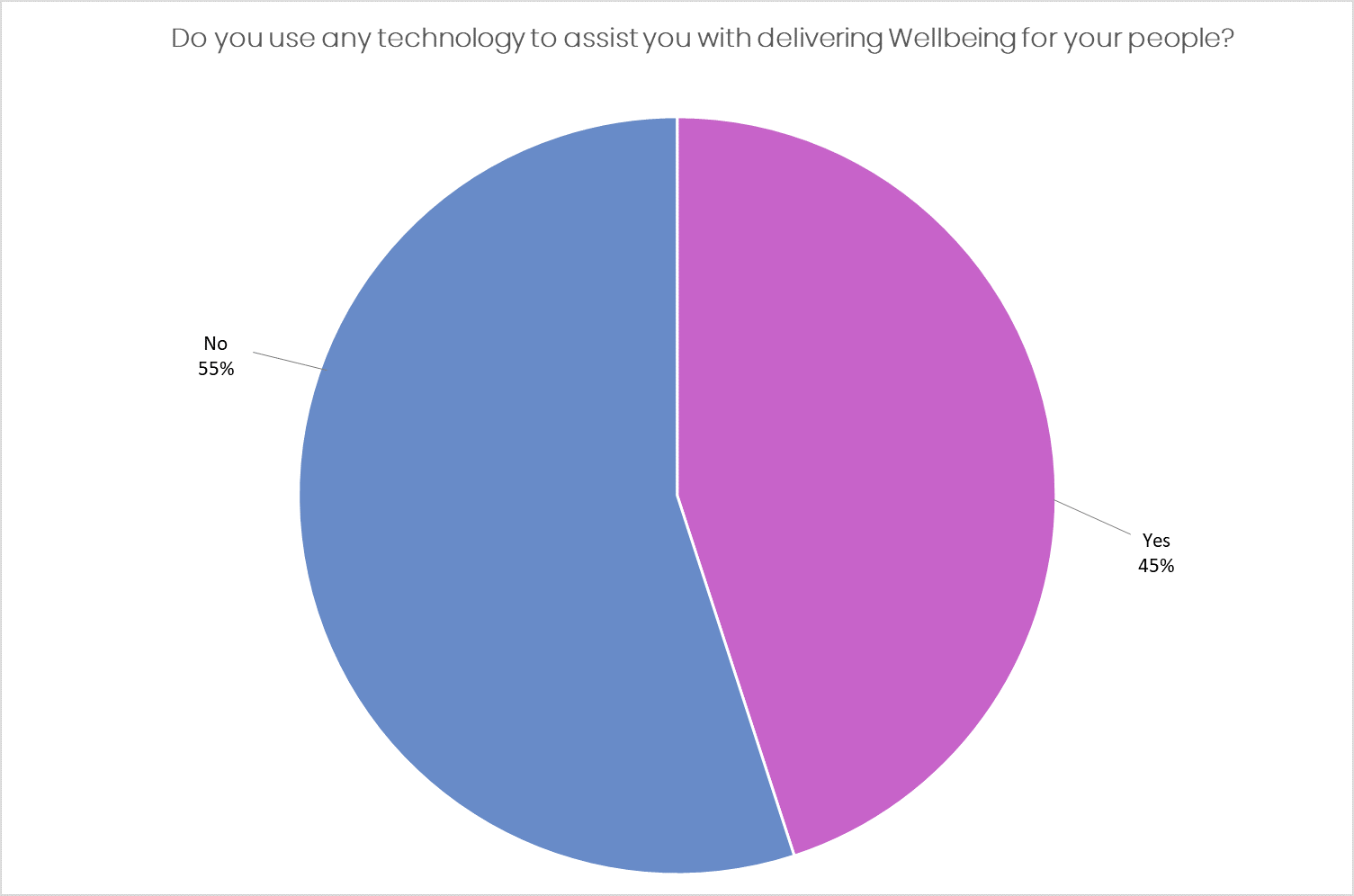
Do you use any technology to assist you with delivering wellbeing for your people?
This question revealed that 55% of respondents did not use any technology for wellbeing. And of the 45% that do, this varied from having videos and an EAP programme, to an app with online activities and materials.
It’s interesting to note that in January 2020, research conducted by Deloittes stated that a return of over 10xROI could be achieved if employers invest in a best practice set of interventions to improve wellbeing. And one of these interventions was the use of technology.
Another question in the survey revealed that 45% of respondents felt they had a lack of information about what technology is available to help provide quality wellbeing support to everyone in the right way at the right time.
Deloittes identified that an organisation should achieve a 10x ROI if four wellbeing intervention criteria were met:
- Preventative
- Large scale
- Use technology
- Provide tailored support
Deloittes also say that the costs to an organisation of poor mental health has risen. “This can be attributed largely to a significant rise in mental-health-related ‘presenteeism’, where employees work when they are not at their most productive, with mental-health related absenteeism and staff turnover contributing to the costs overall.”
Technology can support HR departments by reducing the pressure on team members, while also improving and scaling up the wellbeing activities to improve performance and dramatically reduce presenteeism.
If technology can enable you to reach everyone in your organisation at the same time, provide proactive, confidential, tailored support and ensure that people can be linked to other humans (the right people, those qualified to help them), then it can be very effective.
Leave A Comment